
SnotWatch
Mapping respiratory microbiology information to inform health outcomes.
Background
Medical laboratories use tests that can detect many different viruses (bugs) from a single sample. This allows us to visualise the circulation of many viruses across time and place in Victoria each year.1,2 Coupled with de-identified health impact data from day-care, general practice and hospitals, this can help us understand the impacts each virus can have on our health. This information will help decisions about introducing vaccines and treatments against these viruses
What we’re doing
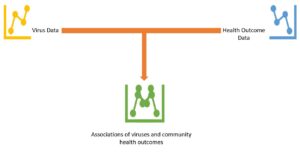
SnotWatch will collate data on health outcomes alongside laboratory results for virus tests. This will create a large and rich data platform. Data in the platform will be fully de-identified, so individuals in datasets will not be able to be identified by researchers. The large data platform will be used to accurately describe and predict health problems related to common viruses in the community. By continuously monitoring this platform, we will learn more about the previously unknown consequences of virus circulation.
Impact
SnotWatch will provide the following using multiple datasets:
- An improved understanding of how virus levels are related to health problems, including:
- Important childhood disorders such as asthma, hepatitis, Kawasaki disease and febrile seizures.
- Common and/or severe adult diseases including chilblains, heart attacks and asthma.
- Methods to assess the proportion of health outcomes caused by a specific virus.
- A website doctors can use to show their patients about viruses circulating in their location and how they might affect them.
- Collaboration with interstate partners to show how the SnotWatch framework works outside Victoria.
Publications
Contact
To get in touch with a SnotWatch study team member, email snotwatch@mcri.edu.au
References
- Lin CY, Hwang D, Chiu NC, Weng LC, Liu HF, Mu JJ, Liu CP, Chi H. Increased Detection of Viruses in Children with Respiratory Tract Infection Using PCR. International Journal of Environmental Research and Public Health. 2020; 17(2):561.
- Kamel Boulos MN, Geraghty EM. Geographical tracking and mapping of coronavirus disease COVID-19/severe acute respiratory syndrome coronavirus 2 (SARS-CoV-2) epidemic and associated events around the world: how 21st century GIS technologies are supporting the global fight against outbreaks and epidemics. International Journal of Health Geographics. 2020; 19(1):8.